

The Row Bags Under 1500 Dollars and The Actual Entry Level
Most people assume the entry price for The Row sits somewhere north of three thousand dollars. That is where the coverage lives, because the Margaux and the Marlo photograph well and resell loudly. The actual floor is far lower than that. Observed 2026 market prices put the start of the line at $590, with a real shelf of the row bags sitting between that figure and $1,500 — current catalogue, not outlet stock and not archive. What gets given up at this level is size and, usually, material weight; what stays is the construction logic, the palladium-plated hardware and the Made in Italy finishing that define the brand. This guide lays out that shelf plainly, names the observed prices, and says where it stops being good value.
What the Bottom of the Range Actually Is
Start with this: the sub-$1,500 group is not a diffusion line and not a separate label. They are catalogue pieces sold next to the five-thousand-dollar bags, in the brand’s own boutiques in Los Angeles, New York, London, Paris and Amagansett and through the same multi-brand stockists. What is traded away is scale and material, not standards. There is simply no large structured calfskin bag at this price anywhere in the current line-up; what you get leather top handle instead is either physically smaller or made in one of the house’s lighter materials. That is an honest exchange rather than a compromise, and it is why this shelf is the usual starting point for anyone new to the row fashion vocabulary. It also means the shelf is shallow — cross $1,500 and prices climb quickly through the Park Totes and the Bourse Clutch into the main range.
The Full Shelf Under 1,500 Dollars, Priced
What follows is the shelf as observed in 2026, ordered from the least expensive upward. Read every figure as a market observation rather than an official tariff, since the brand publishes no master price list and stockists differ. Because sizes and colourways rotate through stock, a model listed here can be temporarily unavailable without having left the line. Two of the entries list a second price, since another size has been observed at that figure. A price dramatically below these numbers is a warning sign, not a discount, and that holds for every listing of the row for sale you encounter secondhand. Start with the right-hand column if you are shopping by function rather than by budget.
| Bag | Observed price, 2026 | Shape |
|---|---|---|
| Double Travel Wallet | $590 | The flat wallet, and the lowest-priced way in |
| Boone Tote | $900 | The lighter tote, smaller size |
| Cecily Mini Tote | $950 | Mini tote, meant for the hand |
| Ray Pouch | $950 / $1,100 | A zip pouch, observed in two sizes |
| Large Boone Tote | $950 | The Boone in its larger cut |
| Travel Pouch | $990 | A flat travel case |
| Sally | $1,000 | A small bag, and the first four-figure step |
| 90’s Bag | $1,090 | A soft shoulder bag in a signature silhouette |
| Brian Tote | $1,100 / $1,200 | The tote, observed in two sizes |
| Mini Barn Tote | $1,200 | The compact tote |
| N/S Park Crossbody | $1,290 | Crossbody from the Park family |
| Lori | $1,350 | Shoulder bag |
| Rene Crossbody | $1,350 | Crossbody |
| Half Moon | $1,390 | A crescent shoulder bag, official 8 x 13.5 x 2.5 in |
| Squared Compact Clutch | $1,390 | Structured compact clutch |
| Idaho | $1,420 | Top handle, XL version observed at $1,690 |
| 90’s Shoulder | $1,450 | A shoulder version of the 90’s silhouette |
If You Want a Real Bag Rather Than an Accessory
Half the shelf is pouches, wallets and mini formats, so the useful question is which of these entries functions as a daily handbag. Three answers stand out across the observed line-up. The Half Moon at $1,390 is the strongest, because it is a signature silhouette rather than a supporting piece, with an official dimension of 8 x 13.5 x 2.5 inches — a figure worth quoting carefully, since published measurements conflict between sources. Through a stockist, a leather variant of the same bag has been observed at $1,690, which demonstrates how fast the material step moves you off this shelf. The 90’s Bag at $1,090 is the other genuine handbag at entry level, and it carries one of the four silhouettes that anchor the whole catalogue. If a tote suits you, the Brian totes at $1,100 and $1,200 and the Boone pair at $900 and $950 cover the carry-everything role for less.
If You Want the Smallest Reasonable Commitment
Some buyers want the construction rather than the silhouette, which is a perfectly legitimate reason to start at the very bottom. The Double Travel Wallet at $590 puts the leather, the stitching and the edge finishing in your hand for the least money the brand asks for anything. The Ray Pouch at $950 and the Travel Pouch at $990 perform the same job with a little more presence, and both sit inside larger bags comfortably. Sally at $1,000 and the Cecily Mini Tote at $950 arrive at the point where a small object starts to behave like a bag. Nobody will mistake these for a Margaux, and none of them carry the resale profile of the signature shapes. What they buy is direct experience of the material standard before committing four or five thousand dollars to a row bag you have only seen photographed.
Where the Money Actually Goes at This Level
It is worth knowing what the money funds under $1,500, since the answer is not the same as at the top of the range. The construction standards do not change: the same restrained exterior with no logo plaque, the same small side stamp, the same matte or brushed palladium-plated fittings. What does change is the quantity and grade of material, and the amount of hand-finishing a smaller panel requires. Hence a pouch and a large structured top-handle can emerge from the same workshop discipline and still sit four thousand dollars apart. What follows are the practical consequences for a first purchase. None amounts to a deal-breaker; each is simply part of what the entry shelf is.
- Smaller formats mean less hardware, which is where a lot of cost sits on the bigger bags
- Over time, lighter materials are harder to service than structured calfskin
- Non-leather constructions — canvas, nylon, sisal — are the least tolerant of water and wear
- Small bags hold their shape less dramatically, which makes the structural signature harder to read
- Later on, seasonal colours discount hardest, and that holds at every price point in the range
How the Entry Shelf Behaves Secondhand
Resale is why many buyers look at this brand in the first place, so it deserves a straight answer rather than a sales pitch. The Row recorded 97% brand-level value retention in the Rebag CLAIR 2025 report, crossing into the top tier for the first time and placing behind only Telfar, Hermes and Goyard. Within that, the Half Moon shoulder was recorded at 106% retention and the N/S Park Tote at 146%, the strongest performer in the line. A separate signal concerns the 90’s Bag, flagged as a riser on reported eBay search volume up around 55% year on year as of April 2025. None of that is investment advice; it is observed market behaviour, and it is concentrated narrowly, with black and neutral calfskin in the signature silhouettes holding value while canvas, nylon, sisal and seasonal colours discount. That places two of the strongest performers on record on or near this shelf, an unusual thing for an entry tier.
A Buying Order That Works
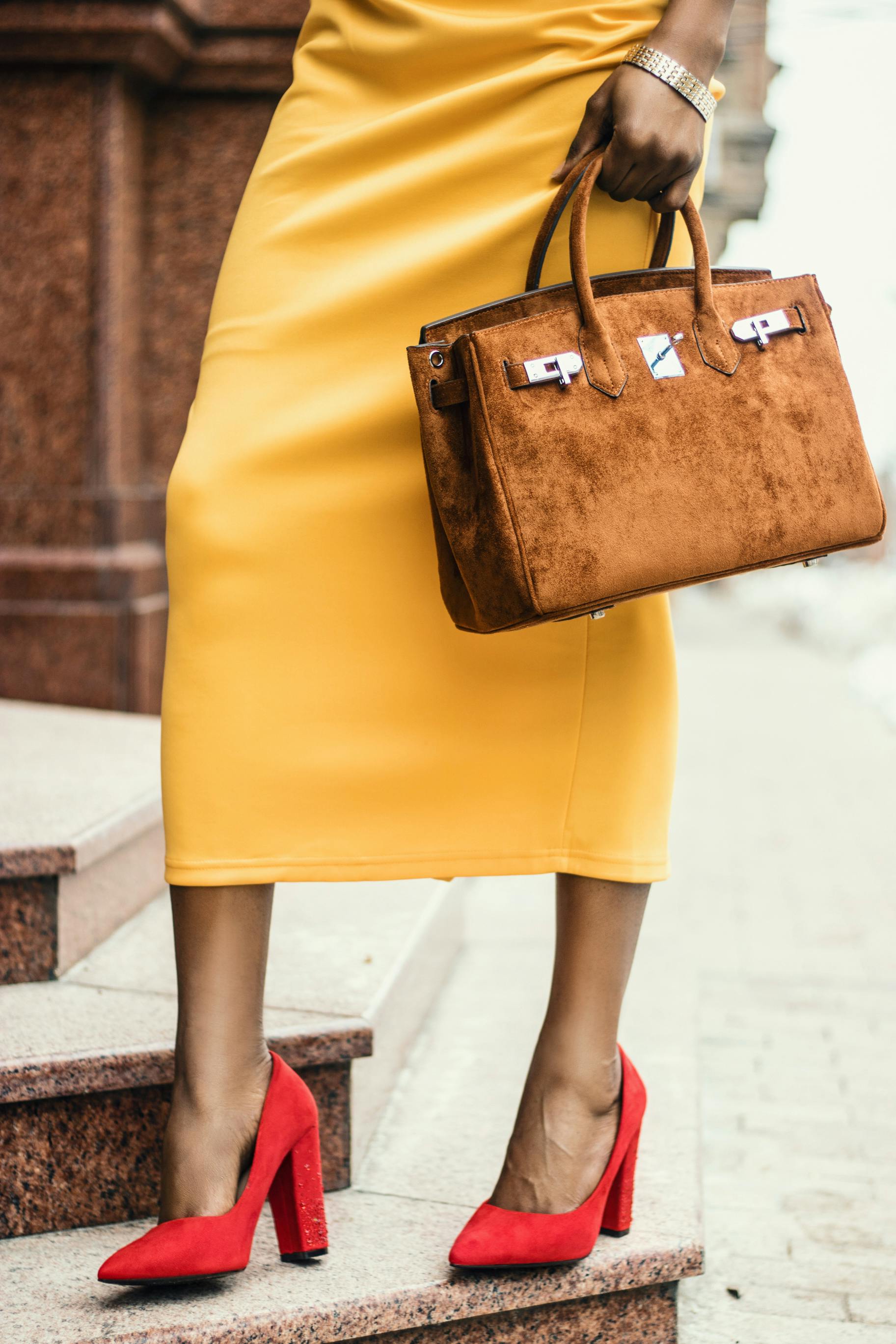
If you are approaching the range for the first time, sequence matters more than budget. Buying the cheapest thing available and concluding the brand is overpriced is the classic mistake, given that a $590 wallet cannot demonstrate what a structured bag does. The better route starts with function, checks the silhouette against your actual carry, and only then looks at the number. Purchasing new through the brand’s own store or an established multi-brand retailer eliminates authentication risk, which counts for something at this price. Should you buy secondhand, use the platforms that authenticate in hand and treat anything far below the figures above with scepticism. The order below is the one that produces the fewest regrets among first-time buyers of row handbags.
- Decide the format first: tote, shoulder, crossbody, clutch or pouch
- Build a shortlist from the table above using that format only
- If you can, handle one in a boutique or stockist, as these bags photograph badly
- Choose black or a neutral if resale matters to you at all
- At this level, buy new unless the secondhand saving is genuinely large
- Anything in the low hundreds is a counterfeit signal, not a bargain